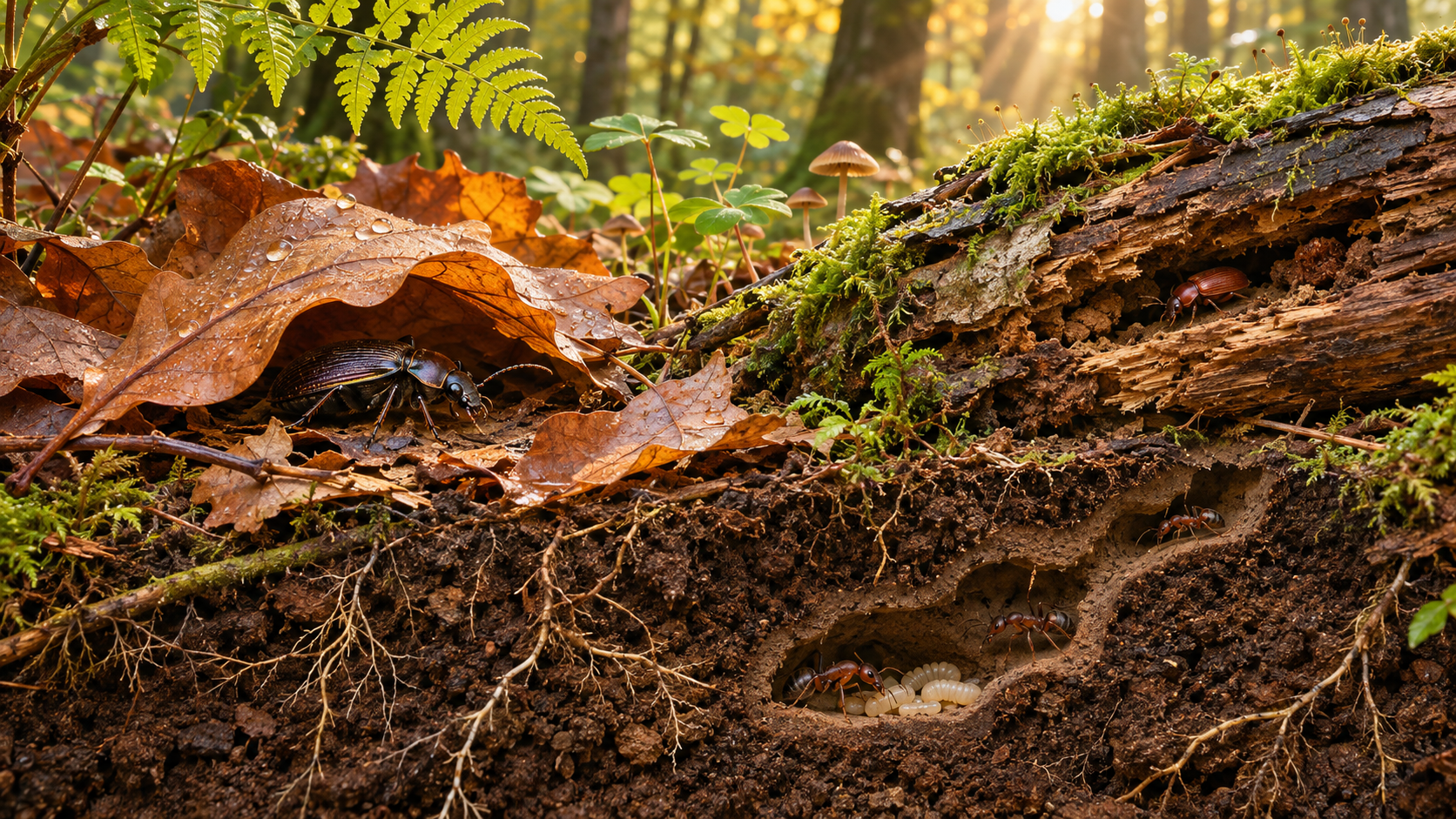
A fallen branch can become a nursery. A pile of leaves can shelter a whole community.
Beneath our feet, leaf litter, decaying wood, and soil create a layered neighborhood where insects find food, protection, and places to grow.
A woodland floor may look untidy compared with a freshly raked lawn, but its scattered leaves and broken branches are working parts of an ecosystem. Look closely beneath a damp leaf or beside an old stump, and you may discover beetles, ants, insect larvae, and other small animals going about their lives.
These places offer more than somewhere to hide. They help insects avoid drying out, escape predators, survive cold weather, and complete different stages of their life cycles. Some insects spend only a season here. Others remain inside wood or underground for years.
Understanding these habitats changes how we see fallen natural material. What appears to be garden waste can be shelter, a food supply, or the foundation of a food web that supports birds, amphibians, and small mammals.
Leaf Litter: A Shelter Built One Layer at a Time
Leaf litter is the loose layer of fallen leaves, small twigs, and other plant material resting on the ground. Its structure creates countless tiny spaces. A curled leaf forms a sheltered pocket, overlapping leaves create narrow passageways, and the underside of the litter stays protected from direct sunlight.
These spaces matter because small insects can lose moisture quickly. Leaf cover slows evaporation and reduces exposure to wind. Although the top layer may become crisp and dry, deeper layers can remain cool and damp, especially beneath trees and shrubs.
Ground beetles commonly hunt within this cover, searching for small prey. Some moth caterpillars feed among fallen leaves, while other insects use the litter mainly as a daytime refuge. The exact residents depend on the region, vegetation, season, and moisture level.
Protection through changing seasons
During autumn and winter, leaf litter helps soften rapid temperature changes near the ground. It does not make the habitat warm in the way a heated room is warm, but it provides insulation. Snow, where present, can add another protective layer.
Some butterflies and moths pass the colder months as eggs, caterpillars, or pupae among fallen leaves or nearby vegetation. Other insects shelter there as adults. Removing every leaf can therefore remove insects at stages when they are difficult to notice and unable to move away quickly.
Dead Wood: A Habitat That Changes as It Ages
A recently fallen branch and a soft, crumbling log are very different homes. Fresh dead wood still has firm bark and dense internal tissues. Over time, fungi and other organisms alter its structure, opening new spaces and changing the food available.
Some beetle larvae develop beneath bark or inside wood. Their tunnels create passageways that may later be used by other small animals. Certain solitary bees also nest in suitable existing holes in dead wood, placing individual brood cells inside the cavities.
As decay advances, the wood becomes softer and often holds more moisture. Insects that feed on fungi, decomposing material, or other inhabitants can become part of the community. Predatory beetles may search the same log for prey.
The important point: Dead wood is not one uniform habitat. Tree species, branch thickness, bark cover, shade, and stage of decay all influence which insects can live there.
Soil: The Underground Part of the Neighborhood
Healthy soil contains particles, organic matter, roots, water, and air-filled spaces. To an insect, this is a three-dimensional landscape. Cracks, abandoned burrows, and gaps around roots provide routes between underground chambers and the surface.
Ants excavate nests with tunnels and chambers used for brood care, shelter, and other colony activities. Many beetles spend their larval stages in soil. Cicada nymphs develop underground and feed on fluids from plant roots before emerging as adults.
Many solitary bees also nest in the ground. Different species prefer different conditions, including particular soil textures, drainage levels, and amounts of sunlight. Some need patches of exposed soil, which is why covering every available surface with thick mulch does not benefit every insect.
Why soil structure matters
Compaction squeezes soil particles together and reduces pore space. This can make digging harder, limit airflow, and change how water moves. Repeated foot traffic, parked vehicles, and heavy machinery can all affect the underground habitat.
Waterlogged soil creates a different challenge because water fills spaces that would otherwise contain air. Some insects tolerate wet conditions, while others need well-drained ground. Supporting insect diversity means recognizing that different species require different underground environments.
| Habitat | What it provides | Possible residents |
|---|---|---|
| Fallen leaves | Moist shelter, hunting spaces, seasonal protection | Ground beetles, some caterpillars, overwintering insects |
| Dead wood | Food, tunnels, nesting cavities, protected interiors | Wood-associated beetles, cavity-nesting bees, ants |
| Soil | Nest chambers, larval habitat, access to roots and prey | Ground-nesting bees, ants, beetle larvae, cicada nymphs |
The Food Supply Is More Varied Than It Looks
Not every insect living among dead leaves eats those leaves. Some consume decomposing plant material, while others graze on fungi or hunt smaller animals. A single patch of litter can therefore support several feeding relationships at once.
Fungi and bacteria play major roles in decomposition. Their activity changes dead plant tissues and makes nutrients available within the ecosystem. Insects and other small animals contribute by chewing, fragmenting, transporting, and consuming material, although their roles vary considerably.
Predators benefit from this activity. A hunting beetle may find larvae beneath bark, while an ant may collect small prey from the litter. Birds searching the ground or probing dead wood connect these tiny food sources to the wider landscape.
The result is a living network built around material that plants have shed. Removing that material can reduce both the shelter and the food supporting the community.
Why Connected Habitats Work Better
An insect may need more than one place to complete its life cycle. An adult can feed on flowers while its young develop in wood or soil. Another species may hunt on the surface during warm weather and retreat beneath leaves when conditions become harsh.
A flower-rich garden can therefore offer only part of what local insects need. Nearby nesting ground, undisturbed litter, standing stems, and decaying branches may supply the missing pieces.
Small habitat patches can be useful even in urban areas. A leafy border beneath a hedge, a shaded log near shrubs, and a sunny patch of bare soil each offer different conditions. Their value increases when insects can move between them without crossing large areas of unsuitable surface.
Making Room for Insects in an Everyday Garden
You do not need to turn an entire yard into woodland. A practical approach is to keep paths and frequently used areas clear while allowing selected borders and quiet corners to retain natural material.
- Move leaves into suitable beds. Gather some fallen leaves beneath shrubs or around trees. Avoid deep piles against building walls, tree trunks, or small plants that could be smothered.
- Keep a few soundly positioned logs. Place untreated wood where it will remain stable and will not obstruct paths or drainage. Ground contact encourages a different community from wood kept dry and elevated.
- Protect soil from unnecessary pressure. Use regular walking routes and avoid repeatedly stepping on damp planting beds. This helps preserve the spaces underground organisms use.
- Leave some suitable ground uncovered. A small, well-drained patch can support ground-nesting insects. Preserve an active nesting area instead of digging it over or covering it.
- Reduce routine disturbance. Frequent raking, digging, and broad-spectrum insecticide use can disrupt residents. Deal with specific garden problems carefully instead of treating every insect as a pest.
Keep firewood stored appropriately away from buildings, and do not move potentially infested wood between regions. If a tree is diseased or affected by a regulated pest, follow local guidance rather than retaining or transporting its wood for habitat.
How to Explore Without Damaging the Home
Choose a small area and observe slowly. Notice whether the leaves are dry or damp, whether a branch still has bark, and whether the soil is loose or compacted. These details help explain why animals gather in one place and are absent from another.
If you lift a small loose branch or gently move surface leaves, return them carefully to their original positions. Avoid pulling apart decaying logs or opening nests. Wear gloves when appropriate, watch for sharp wood, and leave unfamiliar animals untouched.
Repeated visits often reveal more than a single search. Rain, temperature, and the time of day influence activity. A quiet patch in the afternoon may become busy after sunset or following light rain.
A Living Landscape Begins Beneath the Surface
Leaf litter, dead wood, and soil provide different but closely connected homes. Leaves buffer exposure, wood offers changing interiors and cavities, and soil supplies a hidden world of tunnels and chambers.
Leaving a few suitable places undisturbed gives insects room to feed, nest, develop, and survive seasonal changes. The next time you see a fallen leaf or an aging branch, consider what may already be living beneath it.