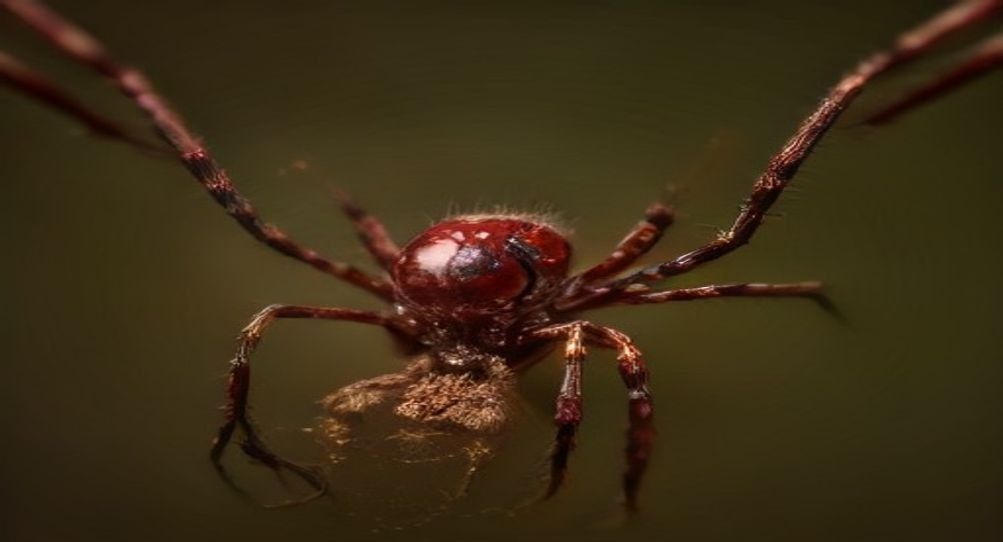
The Hunter-Stalker Strategy: Jumping Spiders (Salticidae) Vision, Hydraulic Locomotion, and Intelligence

While most spiders are passive web-spinners or nocturnal prowlers relying entirely on tactile silk vibrations, one family has abandoned sedentary webs to become diurnal, visual apex hunters: Salticidae, the jumping spiders. Comprising more than 6,000 described species globally—making it the most diverse family in the entire order Araneae—jumping spiders possess an extraordinary biological toolkit: a … Read more

North American Spiders of Medical Significance: Identifying Black Widows, Brown Recluses, and Common Lookalikes

Few creatures in North America evoke more widespread anxiety and misunderstanding than venomous spiders. Of the more than 4,000 spider species inhabiting the United States and Canada, the overwhelming majority are completely harmless to humans, possessing fangs too delicate to pierce human skin or venom tailored strictly to small invertebrates. Only two groups possess venom … Read more

The Engineering Marvel of Spider Silk: Tensile Strength, Spinneret Mechanics, and Web Geometry

Spider silk is universally recognized by materials scientists as one of the most extraordinary structural substances in the natural world. Weight for weight, dragline silk produced by orb-weaving spiders exhibits a tensile strength exceeding that of high-grade alloy steel, combined with an elasticity and energy-to-break toughness surpassing Kevlar. Yet this phenomenal biopolymer is not manufactured … Read more

Insects vs. Arachnids: Anatomical Differences, Cephalothorax Architecture, and Evolutionary Divergence

Within the vast phylum Arthropoda, insects and arachnids represent two monumental evolutionary branches that diverged in the shallow Cambrian seas more than 500 million years ago. Despite sharing jointed chitinous exoskeletons and bilateral symmetry, insects (subphylum Hexapoda) and arachnids (subphylum Chelicerata) operate on fundamentally disparate anatomical, physiological, and sensory blueprints. From the division of body … Read more