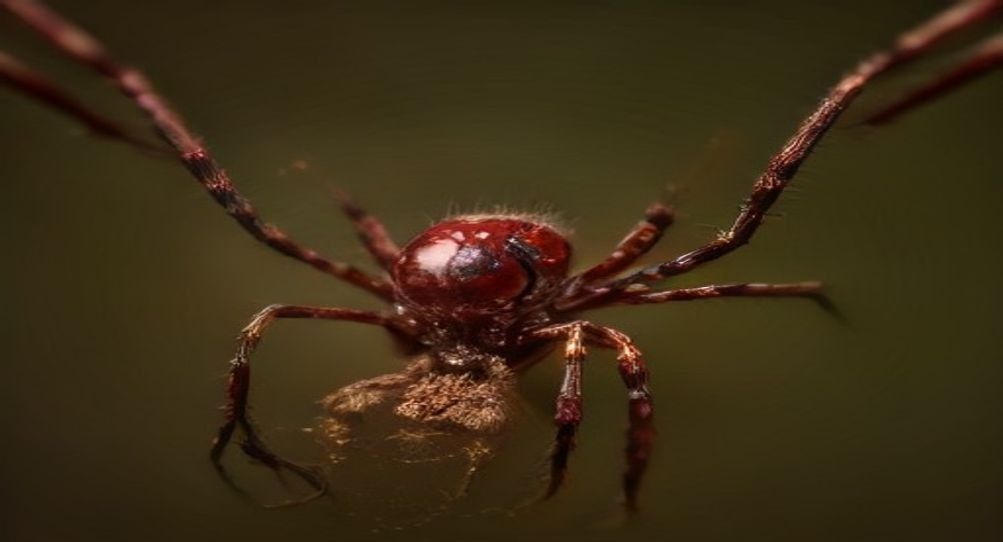
Within the vast phylum Arthropoda, insects and arachnids represent two monumental evolutionary branches that diverged in the shallow Cambrian seas more than 500 million years ago. Despite sharing jointed chitinous exoskeletons and bilateral symmetry, insects (subphylum Hexapoda) and arachnids (subphylum Chelicerata) operate on fundamentally disparate anatomical, physiological, and sensory blueprints. From the division of body tagmata and the presence or total absence of antennae to eight walking legs versus six and venomous chelicerae versus chewing mandibles, unpacking the morphological divide between insects and spiders clarifies one of the most common points of confusion in natural history.
Executive Arachnological Summary
- Body Tagmata: Insects possess three distinct body regions (Head, Thorax, Abdomen), whereas arachnids fuse the head and thorax into a single prosoma (Cephalothorax) paired with an opisthosoma (Abdomen).
- Leg Count & Antennae: Insects possess six thoracic legs (3 pairs) and one pair of sensory antennae. Arachnids possess eight walking legs (4 pairs) and completely lack antennae, relying instead on pedipalps and trichobothria hairs.
- Mouthpart Divergence: Insects belong to Mandibulata, using chewing or sucking mandibles. Arachnids belong to Chelicerata, utilizing pincer-like or fanged chelicerae for prey subdual.
- Respiration: While insects breathe exclusively through tubular tracheal branching networks, arachnids utilize unique laminar “book lungs,” often supplemented by secondary tracheae.
Table of Contents
- 1. Deep Evolutionary Origins: Mandibulata vs. Chelicerata
- 2. Tagmosis: Three-Part Hexapod vs. Two-Part Arachnid Architecture
- 3. Appendage Specialization: Six Legs vs. Eight, Wings vs. None
- 4. Sensory Biology: Antennae vs. Pedipalps & Trichobothria
- 5. Respiratory Mechanics: Tracheal Networks vs. Book Lungs
- 6. Definitive Insect vs. Arachnid Comparison Matrix
- 7. Frequently Asked Questions (FAQ)
- 8. Summary & Taxonomic Insights
1. Deep Evolutionary Origins: Mandibulata vs. Chelicerata
To understand why a spider is fundamentally different from a beetle, one must look back over half a billion years to the Cambrian explosion. During this ancient evolutionary dawn, ancestral arthropods split into two grand evolutionary lineages: Chelicerata (which gave rise to horseshoe crabs, sea spiders, scorpions, harvestmen, ticks, and true spiders) and Mandibulata (which gave rise to myriapods, crustaceans, and insects).
The primary diagnostic milestone of Chelicerata is the transformation of the first pair of post-oral appendages into chelicerae—pincer-like or folding fanged structures utilized for grasping, tearing, and injecting venom into prey. Chelicerates never evolved true jaws. In contrast, Mandibulata evolved opposable mandibles derived from modified third-segment head limbs, which work horizontally to crush, grind, chew, or slice solid matter. This deep evolutionary divergence dictated every subsequent anatomical adaptation, from feeding strategies to locomotion and respiratory organs.
2. Tagmosis: Three-Part Hexapod vs. Two-Part Arachnid Architecture
The external segmentation of an arthropod’s body into functional anatomical units is known in biology as tagmosis. The differences in tagmosis between insects and arachnids are definitive:
The Insect Tripartite Body Plan
All adult insects feature three distinct body tagmata:
1. Head: Dedicated strictly to sensory perception (compound eyes, ocelli, antennae) and food ingestion (mandibles, labrum, maxillae, labium).
2. Thorax: The locomotive center of the insect, subdivided into the prothorax, mesothorax, and metathorax. All locomotive appendages—three pairs of jointed walking legs and, in winged species, one or two pairs of flight wings—are anchored to the thoracic sclerites.
3. Abdomen: Houses the visceral machinery, including the tubular heart, Malpighian tubules (kidneys), digestive tract, respiratory spiracles, and reproductive genitalia. The insect abdomen possesses zero ambulatory walking limbs.
The Arachnid Bipartite Body Plan
Arachnids possess only two major tagmata:
1. Prosoma (Cephalothorax): Formed by the developmental fusion of the head and thoracic segments under a dorsal carapace. The prosoma houses the brain, stomach pump, venom glands, simple ocelli eyes, and anchors all six pairs of appendages: one pair of chelicerae, one pair of pedipalps, and four pairs of jointed walking legs.
2. Opisthosoma (Abdomen): Connected to the prosoma by a narrow, flexible stalk called the pedicel. The opisthosoma contains the book lungs, heart, silk glands, digestive diverticula, and gonopores. Unlike insects, the spider abdomen is unsegmented externally in all modern lineages (except primitive Liphistiidae).
3. Appendage Specialization: Six Legs vs. Eight, Wings vs. None
Counting legs is the most immediate way casual observers differentiate insects from arachnids. Insects are hexapods, consistently possessing six walking legs (3 pairs). Furthermore, insects are the only invertebrates in Earth’s history that ever evolved powered flight; ancestral pterygote insects possess two pairs of wings attached to the meso- and metathorax.
Arachnids, by contrast, possess eight jointed walking legs (4 pairs), each composed of seven distinct segments: coxa, trochanter, femur, patella, tibia, metatarsus, and tarsus. Arachnids have never evolved wings at any point in their 400-million-year terrestrial history. While spiders cannot fly with flapping wings, many small spiders and spiderlings achieve aerial dispersal through ballooning: releasing long strands of gossamer silk into thermal updrafts and atmospheric electrostatic fields to drift hundreds of miles across oceans and continents.
4. Sensory Biology: Antennae vs. Pedipalps & Trichobothria
Perhaps the most profound sensory divergence between the two clades is the presence or absence of antennae. All insects possess a single pair of multi-segmented antennae originating from the frontal head capsule, packed with thousands of olfactory sensilla capable of detecting airborne pheromone molecules and plant scents across vast distances.
Arachnids completely lack antennae. Instead, their sensory window to the world is mediated by two alternative structures:
- Pedipalps: The second pair of prosomal appendages, resembling miniature legs positioned flanking the mouth. In spiders, pedipalps are tactile and chemical sensing organs used to manipulate prey; in adult males, the tips of the pedipalps are modified into complex, bulbous copulatory organs used to transfer sperm packets to the female. In scorpions, pedipalps are enlarged into massive, crushing predatory pincers (chelae).
- Trichobothria: Microscopic, hairline sensory setae seated in cup-like cuticular sockets along the legs. Trichobothria are sensitive enough to detect the displacement of a single air molecule, allowing web-building and hunting spiders to locate struggling insects or approaching predators in pitch darkness based purely on micro-atmospheric pressure waves.
5. Respiratory Mechanics: Tracheal Networks vs. Book Lungs
Respiratory physiology further highlights the deep evolutionary divide between hexapods and chelicerates:
Insect Tracheal System
Insects do not have lungs. Instead, oxygen enters through lateral abdominal and thoracic pores called spiracles, which lead into a complex, branching labyrinth of air-filled tubes known as the tracheal system. These tubules taper down to microscopic, fluid-filled tracheoles that terminate directly against individual muscle and organ cells, delivering oxygen via direct diffusion without requiring respiratory pigments in the hemolymph (blood).
Arachnid Book Lungs
Spiders and scorpions breathe primarily through book lungs, located inside ventral chambers on the underside of the abdomen. A book lung consists of 15 to 80 thin, leaf-like cuticular lamellae stacked parallel to one another like the pages of an open book. Hemolymph circulates within the hollow interior of the lamellae while air flows between them through an external spiracle slit, facilitating gas exchange across the thin cuticular membrane. Because book lungs rely on circulatory transport, spider hemolymph contains hemocyanin, a copper-based respiratory protein that turns pale blue when oxygenated.
6. Definitive Insect vs. Arachnid Comparison Matrix
The comparative matrix below provides a side-by-side anatomical and physiological contrast between Class Insecta and Class Arachnida.
7. Frequently Asked Questions (FAQ)
Are harvestmen (daddy longlegs) true spiders or insects?
Harvestmen (order Opiliones) are arachnids, but they are not true spiders (order Araneae), and they are certainly not insects. Unlike spiders, harvestmen have a cephalothorax and abdomen fused into a single broad oval body without a narrow waist (pedicel). Furthermore, harvestmen possess only two simple eyes, have zero venom glands, and possess zero silk-spinning spinnerets.
Can any arachnid fly under its own power?
No arachnid can fly under powered aerodynamic locomotion. However, many spider species engage in “ballooning” (kiting). By standing on tiptoes on a prominent perch, the spider points its spinnerets skyward and exudes strands of silk. As ambient air currents and negative electrostatic charges in the atmosphere pull on the silk, the spider is lifted into the air, traveling thousands of feet aloft.
Why do spiders have blue blood while insects have clear or greenish hemolymph?
Because insects deliver oxygen directly to cells via air-filled tracheal tubes, their hemolymph doesn’t carry oxygen and lacks respiratory pigments, appearing clear, amber, or greenish due to plant pigments. Spiders, however, rely on book lungs to oxygenate their blood; their hemolymph utilizes hemocyanin, an oxygen-binding protein containing copper atoms. When exposed to oxygen, copper oxidizes, turning spider hemolymph faint blue.
8. Summary & Taxonomic Insights
Understanding the anatomical boundary between insects and arachnids unlocks a deeper appreciation for evolutionary engineering. While insects conquered the terrestrial canopy through the innovation of powered flight, multi-faceted compound vision, and chewing mandibles, arachnids dominated the shadows as master web architects, hydraulic stalkers, and venomous predators, maintaining vital equilibrium across North American ecosystems.
Key Takeaways for Field Naturalists
- Count the body segments: 3 sections (Head, Thorax, Abdomen) = Insect; 2 sections (Cephalothorax, Abdomen) = Arachnid.
- Count the walking legs: 6 legs = Insect; 8 legs = Arachnid.
- Look for antennae: Insects always possess antennae; arachnids completely lack them, using pedipalps instead.
- Check the eyes: Insects have multi-faceted compound eyes; arachnids possess clusters of simple ocelli lenses.