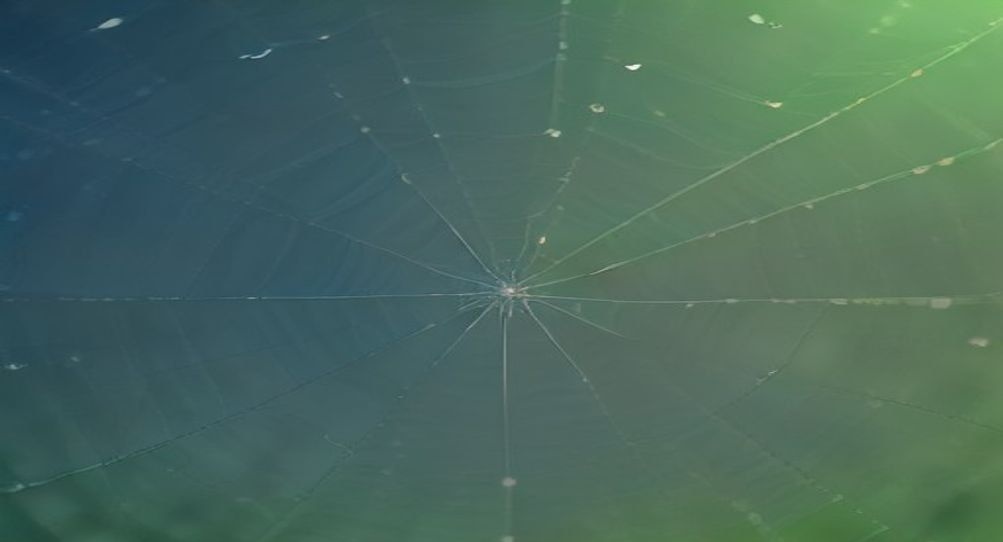
Spider silk is universally recognized by materials scientists as one of the most extraordinary structural substances in the natural world. Weight for weight, dragline silk produced by orb-weaving spiders exhibits a tensile strength exceeding that of high-grade alloy steel, combined with an elasticity and energy-to-break toughness surpassing Kevlar. Yet this phenomenal biopolymer is not manufactured under extreme industrial heat or pressure; it is spun at ambient temperatures from a liquid protein solution stored inside the spider’s abdomen, pulled through microscopic cuticular nozzles known as spigots. Understanding the molecular architecture of spidroin proteins, spinneret valve biomechanics, and the geometric mathematics of orb webs reveals an engineering masterpiece honed over 380 million years of evolutionary refinement.
Executive Biomaterials Summary
- Unrivaled Toughness: Dragline silk exhibits a tensile strength of approximately 1.1 to 1.5 Gigapascals (GPa) with an elasticity of 30 to 40 percent, absorbing up to 150 Joules per gram before failure.
- Nanoscale Architecture: Silk strength is derived from antiparallel poly-alanine beta-sheet nanocrystals embedded within a disordered, glycine-rich amorphous protein matrix.
- Seven Specialized Glands: Advanced orb-weavers possess up to seven distinct abdominal silk glands, each producing chemically specialized silk for draglines, web frames, sticky spirals, egg sacs, or prey wrapping.
- Logarithmic Web Mathematics: Orb webs are engineered using logarithmic spirals and radial tension lines that dissipate kinetic energy from high-velocity insect impacts without snapping the structural frame.
Table of Contents
- 1. Molecular Architecture: The Spidroin Protein Matrix
- 2. Spinneret Anatomy & The Liquid-to-Solid Phase Transition
- 3. The Seven Specialized Silk Glands of Araneidae
- 4. Geometric Engineering of the Orb Web: Radial vs. Spiral Vectors
- 5. Viscid Droplets vs. Cribellate Wool: Two Ways to Stick
- 6. Spider Silk vs. Synthetic Structural Materials Matrix
- 7. Frequently Asked Questions (FAQ)
- 8. Biomimicry Horizons & Concluding Takeaways
1. Molecular Architecture: The Spidroin Protein Matrix
The remarkable mechanical performance of spider silk stems from its unique primary and secondary protein structure. Silk fibers are composed primarily of large structural proteins known as spidroins (major ampullate spidroin 1 and 2 in dragline silk), each with molecular masses ranging from 200 to 350 kilodaltons. The spidroin polypeptide chain consists of repeating block co-polymers alternating between two distinct biochemical domains:
- Crystalline Beta-Sheet Nanocrystals: Blocks enriched with repeating alanine residues (poly-Ala) or alternating glycine-alanine (Gly-Ala) fold into tight, interlocking antiparallel beta-sheets. Stabilized by dense hydrogen bonding networks, these crystalline regions measure only 2 to 5 nanometers across, yet they act as microscopic structural reinforcement pillars, conferring immense tensile strength and stiffness.
- Disordered Amorphous Matrix: Flanking the crystalline domains are glycine- and proline-rich motifs (such as GPGXX and GGX) that form loose, flexible 3_10-helices and random coil conformations. This amorphous protein matrix is highly elastic; when the silk fiber is stretched under tension, these uncoiled peptide loops extend, absorbing massive amounts of kinetic energy before structural rupture occurs.
The synergistic combination of rigid crystalline beta-sheets embedded within a flexible amorphous matrix gives spider silk its extraordinary toughness—defined as the total mechanical work required to fracture a material per unit volume. While steel wire boasts high tensile strength, it has virtually zero stretch and snaps under sudden impulse shocks; spider silk, by contrast, stretches up to 30 to 40 percent of its resting length while absorbing up to three times more energy per gram than modern Kevlar fibers.
2. Spinneret Anatomy & The Liquid-to-Solid Phase Transition
One of the most persistent misconceptions about spider silk is that spiders extrude a pre-formed solid thread from their abdomen. In reality, silk is stored inside abdominal gland ampullae as a clear, highly concentrated (up to 50% protein weight/volume) liquid crystalline dope. How does a spider transform this liquid gel into an insoluble, crystalline solid fiber in fractions of a second without clogging its biological nozzles?
The transition is mediated by the spinnerets—paired, finger-like movable abdominal appendages (typically anterior, median, and posterior pairs) studded with hundreds of microscopic cuticular spigots. As the spider draws liquid dope down the narrowing spinning duct, it subjects the protein dope to three simultaneous physical changes:
1. Shear Stress: The tapered geometry of the duct forces the spidroin molecules to align parallel to the direction of flow.
2. pH Gradient: The duct actively pumps protons, dropping the pH from 7.2 in the gland lumen down to 5.5 near the exit spigot. This acidification triggers conformational changes in the terminal domains of the spidroins, causing them to assemble into interlocking polymers.
3. Water Extraction: Active ion exchange pumps sodium and chloride out of the lumen while pumping in potassium and phosphate, drawing water molecules away from the protein chains via osmosis.
By the time the material exits the spigot orifice, it has undergone an irreversible liquid-to-solid phase transition. Crucially, the spider does not “push” the silk out; it anchors the liquid droplet to a substrate and walks away, or uses its hind tarsal claws to physically pull the silk, with the mechanical drawing tension completing the final crystallization of the beta-sheet nanocrystals.
3. The Seven Specialized Silk Glands of Araneidae
Advanced orb-weaving spiders (family Araneidae) are biological factories equipped with up to seven distinct types of abdominal silk glands, each producing a chemically and mechanically tailored fiber:
1. Major Ampullate Glands
Produces dragline silk. High tensile strength, moderate elasticity. Used for the spider’s continuous safety lifeline, the outer structural frame lines of webs, and the non-sticky radial spokes that transmit vibrations.
2. Minor Ampullate Glands
Produces auxiliary frame silk. Has low elasticity to prevent sagging. Used as the temporary scaffolding spiral during web construction.
3. Flagelliform Glands
Produces the core axle fiber of the capture spiral. Exhibits extreme elasticity (stretching up to 200 to 500 percent without breaking), designed to absorb the sudden kinetic impact of flying prey.
4. Aggregate Glands
Produces liquid glycoprotein glue. Extruded through specialized twin spigots onto the flagelliform core fiber, condensing into sticky microscopic beads that trap prey on contact.
5. Aciniform Glands
Produces swathing silk. Highly flexible, high-toughness silk used to wrap and immobilize struggling prey, as well as line the interior of retreat burrows.
6. Tubuliform (Cylindrical) Glands
Found exclusively in females. Produces coarse, thick protective silk used to construct the outer defensive wall of egg sacs.
7. Piriform Glands
Produces attachment cement. Spun in dense, microscopic crisscross mats (attachment discs) that glue draglines and structural web frames firmly to tree bark, stone, or foliage.
4. Geometric Engineering of the Orb Web: Radial vs. Spiral Vectors
The classic circular orb web constructed by spiders such as the yellow garden spider (Argiope aurantia) is an aerodynamic vibration sensor and kinetic energy absorber engineered according to rigorous geometric principles.
Construction follows a strict sequential algorithm:
1. Bridge Line: The spider releases an ultra-light silk strand into the breeze until it snags a distant branch, then reinforces it to establish the primary horizontal bridge.
2. Frame and Hub: A loose thread is dropped to form a ‘Y’ shape, establishing the central hub, followed by the outer boundary frame.
3. Radial Spokes: The spider lays 20 to 40 non-sticky major ampullate radial spokes connecting the hub to the outer frame. These radials are kept under high, uniform tension to conduct prey impact vibrations directly to the spider’s waiting legs.
4. Logarithmic Capture Spiral: Working inward from the outer frame, the spider lays the sticky flagelliform/aggregate capture spiral, following a mathematical equiangular (logarithmic) spiral spacing pattern that optimizes surface area coverage while minimizing protein expenditure.
When a flying insect strikes the web at high velocity, the radial spokes stretch and distribute the impact force outward to the perimeter frame, while the hyper-elastic capture spiral wraps around the prey, preventing it from bouncing out of the web like a trampoline.
5. Viscid Droplets vs. Cribellate Wool: Two Ways to Stick
Spiders utilize two entirely different physical strategies to make their webs adhere to prey:
Viscid Silk (Araneoids)
Modern orb-weavers employ aqueous glue. As the sticky spiral is spun, surface tension causes the liquid aggregate coating to spontaneously bead up into thousands of microscopic droplets spaced along the flagelliform core. Each droplet contains hygroscopic organic salts (such as choline and isethionic acid) that absorb ambient atmospheric humidity, keeping the glue sticky and pliable even in dry weather.
Cribellate Silk (Hackle-Band Weavers)
Primitive web builders (such as Deinopis and Uloborus) use dry, mechanical adhesion. They possess an extra spinning plate called a cribellum, perforated with tens of thousands of microscopic spigots. Using a comb of specialized bristles on their fourth hind leg (the calamistrum), the spider combs out thousands of nano-scale silk fibrils (only 10 to 20 nanometers in diameter). This produces a fuzzy, wool-like “hackled” thread that adheres to insects through capillary forces and molecular van der Waals forces, tangling the microscopic barbs of the insect’s cuticle without requiring chemical glue.
6. Spider Silk vs. Synthetic Structural Materials Matrix
The table below compares the mechanical properties of spider dragline silk against standard synthetic and natural structural engineering materials.
7. Frequently Asked Questions (FAQ)
Why don’t spiders get stuck in their own webs?
Spiders employ three separate mechanisms to avoid entrapment:
1. They walk primarily on the non-sticky structural radial spokes and frame lines, avoiding the sticky spiral threads.
2. Their tarsal leg tips feature specialized anti-adhesive branched setae that minimize contact area with glue droplets.
3. Spiders groom their legs with an oily cuticular chemical coating that prevents glycoprotein glue from wetting their exoskeleton.
Do spiders recycle their old webs?
Yes. Producing silk requires significant metabolic investment in amino acids. Many orb-weaving spiders tear down and eat their old, damaged web every evening or morning. The ingested spidroin proteins are digested in the midgut and recycled into new liquid silk dope inside the abdominal glands within a few hours, achieving a protein recycling efficiency exceeding 90 percent.
Why hasn’t spider silk replaced Kevlar in human manufacturing?
Unlike domesticated silkworms which are docile herbivores, spiders are territorial, cannibalistic predators; keeping thousands of spiders together in factory farming results in them killing and eating each other. Furthermore, synthetic genetic engineering (producing spidroins in transgenic goats, yeast, or bacteria) struggles to replicate the precise shear-stress, pH, and dehydration dynamics of the spider’s microscopic spinning duct.
8. Biomimicry Horizons & Concluding Takeaways
Spider silk represents the pinnacle of sustainable, high-performance structural bioengineering. Synthesized entirely at room temperature from water-soluble proteins without toxic petrochemical solvents, it outperforms human-made synthetics in energy absorption and biocompatibility. As researchers unravel the molecular mechanics of spidroin folding and spinneret micro-fluidics, spider silk is inspiring next-generation biodegradable medical sutures, artificial ligaments, lightweight body armor, and eco-friendly structural composites.
Key Takeaways for Field Naturalists
- Spider silk combines high tensile strength with extreme elasticity, giving it unrivaled fracture toughness.
- Spidroins transition from liquid to solid through physical shear forces, pH drops, and water removal inside spinneret ducts.
- Orb-weaving spiders utilize up to seven specialized silk glands to manufacture distinct structural and capture fibers.
- Orb webs utilize non-sticky radial spokes to conduct vibrations and hyper-elastic capture spirals to absorb insect impacts.