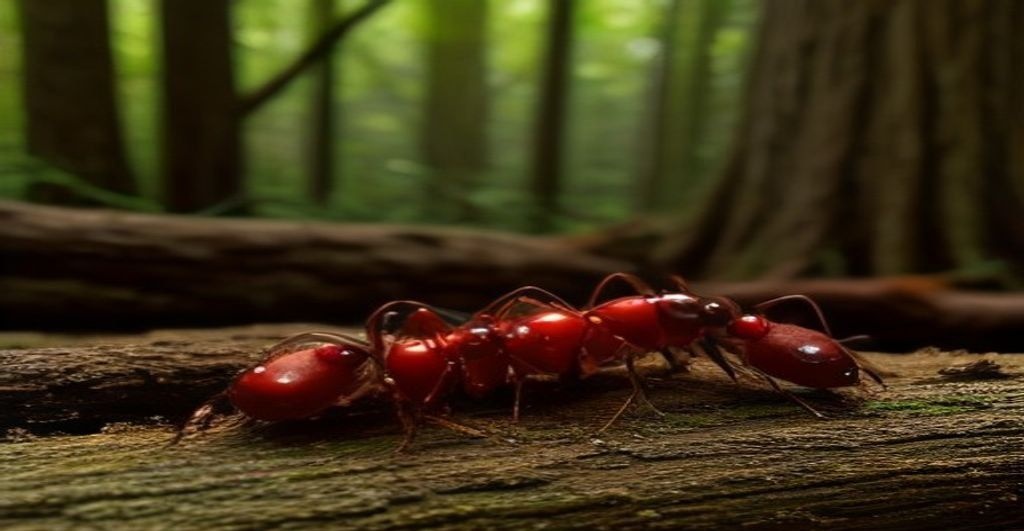
While humans perceive the world predominantly through vision and acoustic speech, the vast majority of the Earth’s one million insect species communicate through an invisible, silent sensory channel: chemical language. Through the synthesis and detection of semiochemicals—volatile organic molecules secreted into air currents or deposited onto substrates—insects coordinate monumental colonial tasks, attract mates across miles of dense forest canopy, alert nestmates to imminent predatory threats, and mark invisible olfactory superhighways. From the multi-component trail pheromones of foraging ants to the alarm alerts of agitated hornets and the aggregation pheromones of bark beetles, deciphering the chemical vocabulary of insects reveals one of the most sophisticated communication networks on the planet.
Executive Semiochemical Summary
- Semiochemical Taxonomy: Chemical signals divide into pheromones (intraspecific communication between members of the same species) and allelochemicals (interspecific signals, including allomones, kairomones, and synomones).
- Olfactory Sensilla Mechanics: Odorant molecules pass through microscopic cuticular pores on the antennae, binding to Odorant Binding Proteins (OBPs) that ferry molecules across sensillar lymph to olfactory receptor neurons (ORNs).
- Dual-Component Trail Trails: Foraging ants lay multi-tiered chemical trails: a volatile, short-lived recruitment signal paired with an ultra-durable orientation backbone that persists for weeks.
- Alarm Pheromone Dynamics: Alarm chemicals are typically low-molecular-weight, highly volatile hydrocarbons (such as 2-heptanone and isoamyl acetate) designed to evaporate rapidly, creating localized, short-duration panic bursts.
Table of Contents
- 1. The Molecular Vocabulary: Pheromones vs. Allelochemicals
- 2. How Insects “Smell”: The Biophysics of Antennal Sensilla
- 3. Trail-Following Dynamics: The Olfactory Highways of Ants
- 4. Alarm Pheromones and Mass Attack Recruitment
- 5. Sex Pheromones: Navigating Odor Plumes Over Miles
- 6. Major Insect Pheromone Classes Matrix
- 7. Frequently Asked Questions (FAQ)
- 8. Agricultural Applications: Pheromone Mating Disruption
1. The Molecular Vocabulary: Pheromones vs. Allelochemicals
In chemical ecology, any chemical substance that conveys a message between living organisms is designated as a semiochemical (from the Greek semeion, meaning signal). Semiochemicals are fundamentally bifurcated based on whether the sender and receiver belong to the same or different species:
- Pheromones (Intraspecific): Signals exchanged exclusively between members of the same species. These include sex attractants, trail markers, alarm warnings, aggregation scents, and queen-recognition primers that regulate social caste development.
- Allelochemicals (Interspecific): Signals operating across species boundaries, subdivided into three evolutionary categories:
- Allomones: Benefit the sender at the expense of the receiver (e.g., defensive chemical sprays, deceptive floral scents that trap pollinators).
- Kairomones: Benefit the receiver at the expense of the sender (e.g., a parasitic wasp smelling bark beetle aggregation pheromones to locate and destroy the beetle’s larvae).
- Synomones: Mutually benefit both sender and receiver (e.g., a corn plant under caterpillar attack releasing volatile organic compounds that summon beneficial parasitic wasps to destroy the caterpillars).
2. How Insects “Smell”: The Biophysics of Antennal Sensilla
An insect does not possess a nose. Instead, its primary olfactory organs are its paired antennae. Under a scanning electron microscope, the surface of an insect antenna is carpeted with thousands of microscopic cuticular hair-like projections known as olfactory sensilla (sensilla basiconica and sensilla trichodea).
The sensory process operates through exquisite molecular mechanics:
1. Cuticular Pores: Airborne semiochemical molecules strike the sensillum wall and enter through thousands of microscopic pore tubules measuring less than 15 nanometers wide.
2. Odorant Binding Proteins (OBPs): Inside the sensillum is an aqueous fluid called the sensillar lymph. Because pheromones are hydrophobic lipid hydrocarbons, they cannot dissolve in water. Specialized chaperone proteins called OBPs bind to the pheromone molecule, shielding it from aqueous degradation and carrying it across the lymph to the dendritic membranes of Olfactory Receptor Neurons (ORNs).
3. Neuronal Transduction: The pheromone-OBP complex docks with an Olfactory Receptor (OR) paired with an obligatory co-receptor (Orco), opening ion channels that trigger rapid depolarization. The resulting electrical action potential travels directly down the antennal nerve to the antennal lobe in the brain, where spherical micro-neuropil clusters called glomeruli process the signal within 20 milliseconds.
3. Trail-Following Dynamics: The Olfactory Highways of Ants
Few behaviors illustrate chemical communication more vividly than the marching columns of foraging ants. When a scout ant (such as a leafcutter or carpenter ant) discovers a rich food source, it returns to the nest while pressing the tip of its abdomen against the soil, depositing an unbroken chemical trail from its poison gland, Dufour’s gland, or hind-gut.
Sophisticated ant species do not use a single chemical; they employ a multi-component chemical blend:
– Volatile Recruitment Component: Highly volatile compounds (such as pyrazines) that evaporate rapidly into a wide odor corridor, instantly rousing nestmates and mobilizing rapid reinforcements.
– Persistent Orientation Component: Heavier, non-volatile hydrocarbons that adhere to the soil for days or weeks. Even after the initial feeding rush subsides, this durable chemical backbone guides future generations back to the productive foraging territory.
As ants follow the trail, they swing their antennae from side to side in an undulating pattern known as osmotropotaxis. If the left antenna detects a weaker concentration than the right antenna, the ant immediately pivots toward the right, maintaining its trajectory along the central high-concentration peak of the chemical vapor plume.
4. Alarm Pheromones and Mass Attack Recruitment
When an insect colony is threatened, visual cues are useless inside pitch-black subterranean chambers or hollow tree nests. Instead, social Hymenoptera rely on alarm pheromones.
Alarm chemicals are specifically evolved to possess small molecular weights (typically 5 to 10 carbon atoms) and high vapor pressures. Compounds like isoamyl acetate (the alarm pheromone of honeybees, which smells distinctly of artificial banana) and 2-heptanone spread rapidly through air currents, creating a short-lived bubble of excitation. When an agitated honeybee worker stings a perceived threat, her barbed stinger pulls free, leaving behind venom glands that continuously pump isoamyl acetate into the air. This chemical beacon marks the intruder with an unmistakable target scent, triggering hundreds of nearby guard bees to converge and deliver coordinated defensive stings on the exact same location.
5. Sex Pheromones: Navigating Odor Plumes Over Miles
The sensitivity of insect sex pheromone detection borders on the miraculous. Female giant silkmoths, such as the North American Polyphemus moth (Antheraea polyphemus) and Luna moth (Actias luna), emit minute quantities of sex attractants (such as bombykol analogues) from abdominal eversible glands. The male moth’s feathery, bipectinate antennae are covered in over 60,000 olfactory sensilla tuned specifically to that single female molecule.
Laboratory electroantennogram studies demonstrate that a male moth’s brain registers an electrical impulse if a single molecule of the female pheromone strikes a single sensory hair. In wild forests, male moths can detect a calling female from distances exceeding two to three miles. Because wind turbulence breaks the scent into fragmented, discontinuous odor filaments, the male executes an anotaxis flight algorithm: flying upwind when he encounters a scent filament, and casting laterally back and forth across the wind vector the instant the scent trail is lost, until he re-enters the plume.
6. Major Insect Pheromone Classes Matrix
The table below summarizes the primary functional categories of insect pheromones, their chemical composition, and representative ecological examples.
7. Frequently Asked Questions (FAQ)
Why does banana oil or ripe bananas make bees aggressive?
The synthetic flavoring used in banana-flavored candies and ripe bananas is predominantly isoamyl acetate. By pure evolutionary coincidence, isoamyl acetate is the identical primary chemical compound that honeybees synthesize in their sting apparatus as their alarm pheromone. Smelling banana oil near a hive signals an active predator attack, prompting guard bees to mobilize and sting defensively.
What is an “ant circular mill” or death spiral?
In blind army ants (genus Eciton), workers rely 100 percent on following the trail pheromones of the ant directly in front of them. If a foraging column becomes separated from the main troop, the lead ants can inadvertently cross their own scent trail, forming a continuous closed loop. The ants follow the loop endlessly in a circle until thousands drop dead from exhaustion, demonstrating the unyielding power of automated chemical programming.
How do queen bees use chemical signals to control worker reproduction?
A honeybee queen secretes Queen Mandibular Pheromone (QMP), a 5-component chemical blend containing 9-hydroxy-2-decenoic acid. As workers groom and feed the queen, they ingest QMP and pass it through the colony via mouth-to-mouth food sharing (trophallaxis). QMP acts as a primer pheromone that chemically suppresses ovary development in female workers and inhibits them from constructing new queen cells.
8. Agricultural Applications: Pheromone Mating Disruption
Modern organic agriculture leverages insect chemical language through mating disruption technology. By synthesizing female sex attractants in laboratories and deploying thousands of slow-release chemical dispensers across apple orchards or cotton fields, farmers flood the atmosphere with female scent plumes. Male moths become sensory-overwhelmed, unable to locate calling females amid the background chemical fog. Because females never mate, no fertilized eggs are laid, eliminating crop-damaging caterpillars without spraying a single drop of toxic synthetic insecticide.
Key Takeaways for Field Naturalists
- Insects perceive semiochemicals using porous antennal sensilla and odorant-binding transport proteins.
- Ant trails combine rapid, volatile recruitment chemicals with durable long-term orientation hydrocarbons.
- Alarm pheromones possess low molecular weights and high volatility to deliver localized, fast-acting warnings.
- Synthetic pheromone dispensers protect millions of acres of American fruit orchards through safe mating disruption.